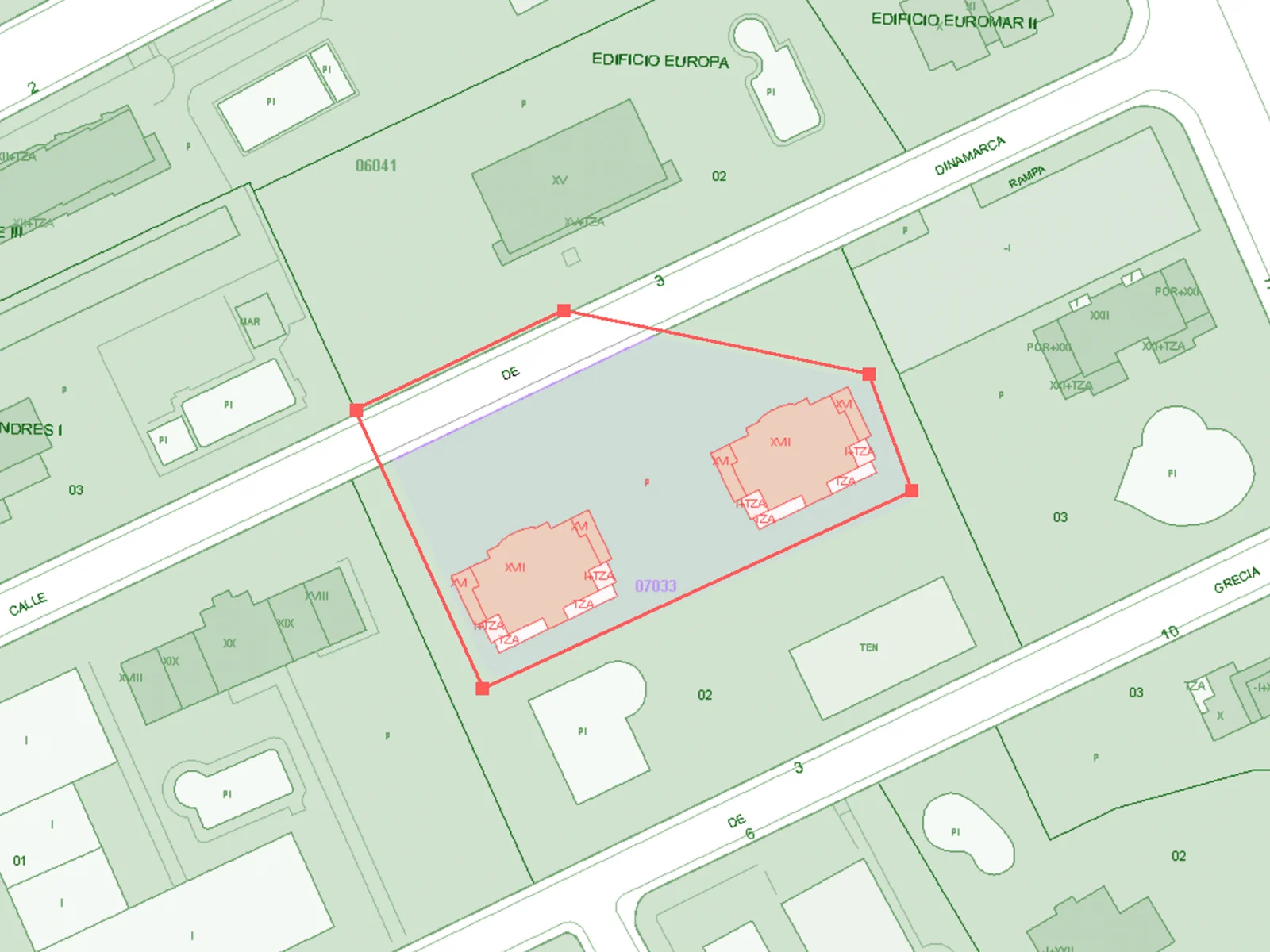
CADASTRE VS LAND REGISTRY: CAN DISCREPANCIES PREVENT YOU FROM SELLING YOUR PROPERTY?
Square metres that don’t add up? The issue that could complicate the sale of your property
If you are planning to sell a property or plot in Altea or anywhere on the Costa Blanca and have discovered that the surface area does not match between the Cadastre and the Land Registry, it is perfectly normal to be concerned.
While this situation is quite common in Altea and across the Costa Blanca, it can—often without the owner even realizing—delay or even block the sale of a villa or plot.
At ALTEAINVEST, we encounter this issue regularly, and in many cases, it is the real reason why a property fails to sell.
What Is the Difference Between the Cadastre and the Land Registry?
Understanding the difference between the Cadastre and the Land Registry is essential. A clear understanding can prevent many issues when buying or selling real estate in Spain.
The Cadastre is an administrative register under the Ministry of Finance (Hacienda). Its purpose is to describe the physical characteristics of a property and serve as the basis for calculating taxes such as IBI (property tax) or plusvalia (local capital gains tax). However, it does not legally prove ownership. The Cadastre allows you to geolocate properties and access public data such as address, cadastral reference, and surface area.
The Land Registry, under the Ministry of Justice, records legal rights over properties. Its purpose is to provide legal security and protect ownership rights against third parties. It includes the legal description of the property, ownership, rights such as usufructs or easements, and any encumbrances like mortgages or liens.
Both systems operated independently until 2015, when Law 13/2015 introduced measures to coordinate them and improve legal certainty through data exchange.
In legal matters—ownership, rights, or charges—the Land Registry always prevails.
Why Do Discrepancies Occur?
Differences between the Cadastre and the Land Registry are very common in Spain, particularly in:
Older properties
Undeclared renovations or extensions
Rural plots
Changes not registered formally
What Happens If Surface Areas Do Not Match?
Discrepancies may affect surface area, boundaries, ownership details, or even location data. If a property shows discrepancias, several issues may arise such as:
1. Mortgage Difficulties
Banks rely on Land Registry data. If discrepancies exist, financing may be denied or reduced until the issue is resolved.
Under Law 5/2019 on real estate credit, properties used as collateral must undergo an official valuation. If the appraiser detects inconsistencies between the Registry, Cadastre, and physical reality, the valuation—and therefore the transaction—may be compromised.
2. Buyer Distrust
Surface discrepancies immediately raise concerns, especially among foreign buyers unfamiliar with the Spanish system.
Result: price renegotiations or loss of the buyer.
3. Notary or Registry Issues
The notary may note discrepancies in the deed or request technical clarification, delaying the transaction—or even causing the buyer to withdraw.
4. Loss of Property Value
Properties with legal inconsistencies are harder to sell and often require price reductions.
5. Urban Planning Issues
Local authorities may require corrections before granting licenses.
6. Boundary Conflicts
These may require notarial mediation or legal action, such as:
Ownership claims (to recover invaded land)
Boundary demarcation procedures
Can This Be Resolved?
Yes. In many cases, it is advisable to resolve discrepancies before selling—although it is not always mandatory.
At ALTEAINVEST, we generally recommend addressing the issue as early as possible, as resolution timelines are often incompatible with the speed required for a sale or mortgage process.
How to Resolve Cadastre vs Land Registry Discrepancies
There are several ways to align both records:
1. Cadastre–Registry Coordination
A qualified technician (architect or surveyor) prepares a graphical validation report, aligning cadastral data with the georeferenced reality of the property.
2. Correction in the Cadastre
If the error lies in the Cadastre, it can be corrected through an administrative procedure known as “discrepancy rectification.”
3. Rectification in the Land Registry
If the Registry is incorrect, a notarial deed supported by a technical certificate is required.
4. Ownership Proceedings (Expediente de Dominio)
In more complex cases, especially rural properties, a specific legal procedure is necessary.
Must It Always Be Resolved Before Selling?
Not necessarily. A property can still be sold if:
The buyer is properly informed
The sales strategy is adapted
The transaction is carefully structured
This is where the difference lies between a standard real estate agency and a professional one experienced in handling these issues.
Real Case on the Costa Blanca
Property in Altea: 140 m² in the Cadastre vs 110 m² in the Land Registry
Problem: Buyer could not obtain financing
At ALTEAINVEST:
We analyzed the situation
Coordinated documentation
Adjusted the sales strategy
Result: Successful transaction without delays
Conclusion
If the Cadastre and the Land Registry do not match, it can:
• Kill your buyer’s mortgage
• Trigger distrust instantly
• Delay the deal for months
• Or quietly destroy your sale altogether
It is quite common but…., can be resolved
The key is knowing how to manage it properly in each specific case.
Do You Have This Problem?
At ALTEAINVEST, we analyze your property and tell you exactly:
What is happening
Whether it affects the sale
How to solve it
Our in-house legal team specializes in:
Property regularization
Registry and notarial procedures
Legal defense in boundary disputes
Advisory in sales and inheritance transactions


